Kirsten's sister with her family and her brother joined us in Darwin for a two week trip around the top end. We did a 1,000 km loop from Darwin to Litchfield National Park, Nitmiluk National Park (Kathrine Gorge), Mataranka, Kakadu National Park and back to Darwin.
Darwin has an interesting history. It was completely destroyed twice, once by over 60 bombing raids by the Japanese during WWII and then again in 1974 by Cyclone Tracy. The multicultural population is still only 136,000 but the city has everything a traveler could want. Below Darwin viewed from East Point.....
... and a nice sunset from the sailing club.
We could have spent a week in Darwin alone, there are so many things to see and do. The wave pool below.
Litchfield National Park is famous for its magnetic termite mounds (the one below is not a magnetic one!) and the pandanus-lined pools and waterfalls.
Most of the park is inaccessible during the wet season and even during the dry some creek crossings were quite deep. Here's Phil giving his rental 4WD a wash. Better not get stuck on these crossings, because saltwater crocodiles could be anywhere!
The designated swimming areas are opened after the wet season once the saltwater crocs have been relocated. Hopefully, they can't make it up the creek until the next flood, but you never know! One area was closed for camping and swimming because a large saltie was spotted! Below Tjaynera Falls. A great swimming spot with clear, cool water.
These creeks, waterfalls and pools provide habitat for an amazing array of freshwater species!
Green Tree Ants (or Weaver Ants) are used by indigenous groups as food and medicine. The acidic liquid in the bright green gasters tastes like lime juice. Of course the kids had to try it! The only problem: the ants are highly territorial and workers aggressively defend their nests!
The nests are built by "weaving" together leaves using larval silk.
Kirsten and Alex cooking lunch at Wangi.
Next stop: Nitmiluk National Park (or Katherine Gorge). The gorge is best explored in canoes, so we hired some for two days. What we didn't know was how little storage room for camping gear these canoes had!
Alex and I paddling up-stream on the first day.
The gorges are separated by rocks and we had to carry/drag all the gear over them. The first portage had a walking path, but after that is was rocky, slippery and wet! Angus and Phil carrying one of the heavy canoes from the first to the second section of the gorge.
The portage from the third to the fourth gorge was long and hard work! Lucky we brought two long ropes, so we could drag the canoes!
What a beautiful spot for lunch! Once we left the second gorge we were on our own! All the day-trippers, tour groups and cruise boats were left behind.
We saw plenty of freshwater crocodiles; they are harmless to humans unless you harass them.
Don't they look like they are grinning?
Our camping spot at Smitt Rock.
Kirsten was boiling water for hours to make sure everybody re-hydrated! Miso soups, backcountry dinners, hot chocolates and lots of tea.
The sun sets very early in the gorge. Lucky we were exhausted from the paddling, rock hopping and pulling, so we didn't mind an early night.
Smitt Rock with reflection. What a stunning place!
Back in the campground we had to make sure our dinner didn't get completely stolen (or given away by the kids).
Bitter Springs in Elsey National Park provide a relaxing swimming pool surrounded by palm forest. The spring water rises from underground at 30.5 million litres per day and at a temperature of 34 degrees celcius. We certainly were not the only ones there!
Caroline and Kirsten looking comfortable. One can float down the river, then walk back up and do it again. Round and round.... Because we camped next to the springs, we outlasted everybody!
Roper River is famous for Barramundi fishing, so Alex and Chapman tried their luck. I'm not sure there was anything bigger than an Archer Fish in this section of the river.
Kirsten, Alex, Phil, Chapman and Caroline in the infinity pool on top of Gunlom Waterfalls in Kakadu National Park.
In the pool below the waterfall swimming is not recommended, because saltwater crocodiles can access this area.
Kakadu National Park is world heritage listed due to amazing aboriginal rock art and a unique combination of ecosystems, including tidal flats, floodplains, lowlands and escarpments, which provide habitat for a wide range of rare or endemic species of plants and animals. We did an early morning cruise on Yellow River.
Sunrise over the wetlands!
Note the feral horses.
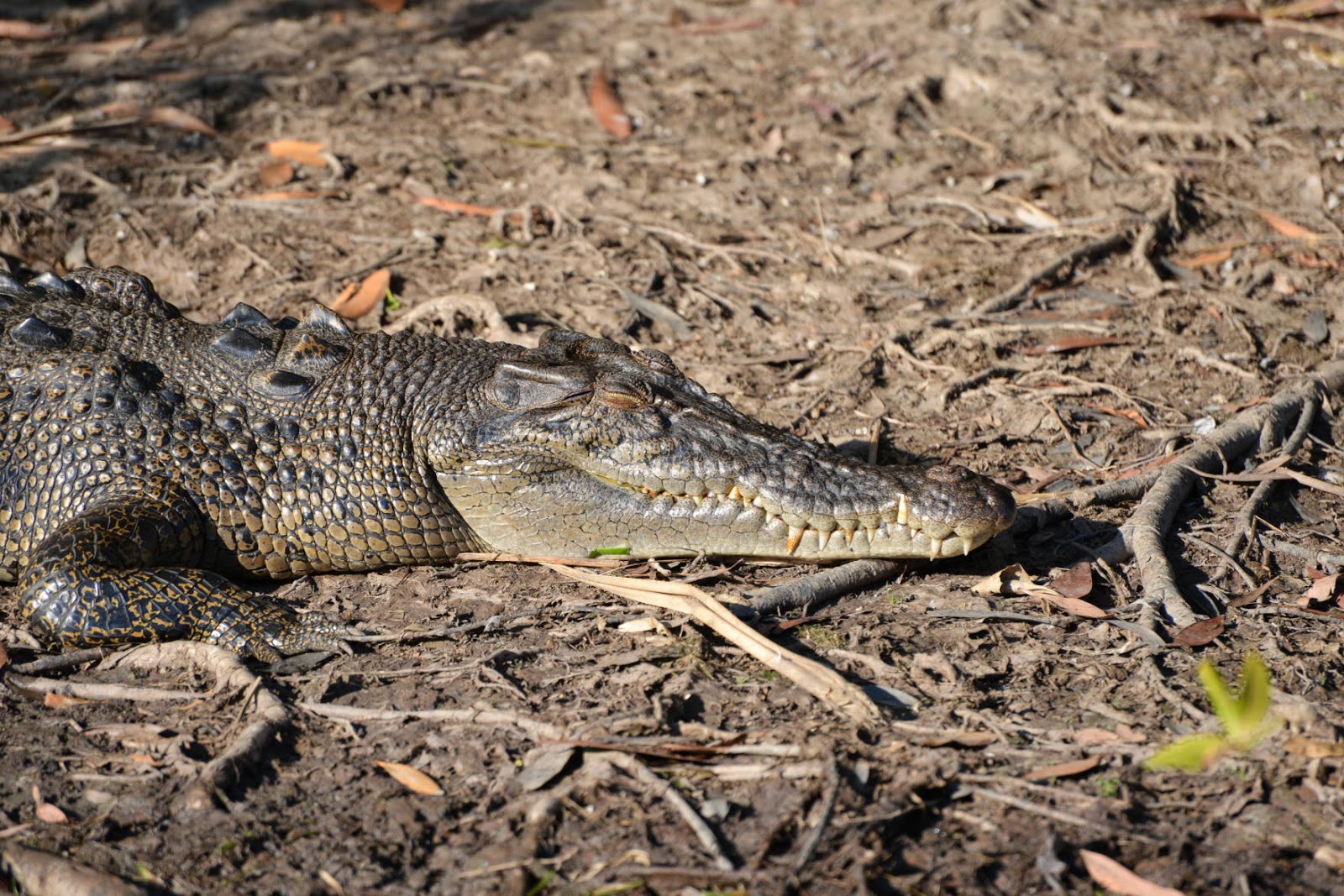
Estuarine (saltwater) crocodiles are the world’s largest reptiles and Australia’s largest estuarine
and freshwater predators. They were almost hunted to extinction for their skins until 1971. Now they are protected their numbers seem to be increasing. We saw at least ten during a 2 hour cruise!
The longest saltie ever caught is "sweetheart", which reached 5.1 m in length!
There are two crocodiles and at least five bird species in this image!
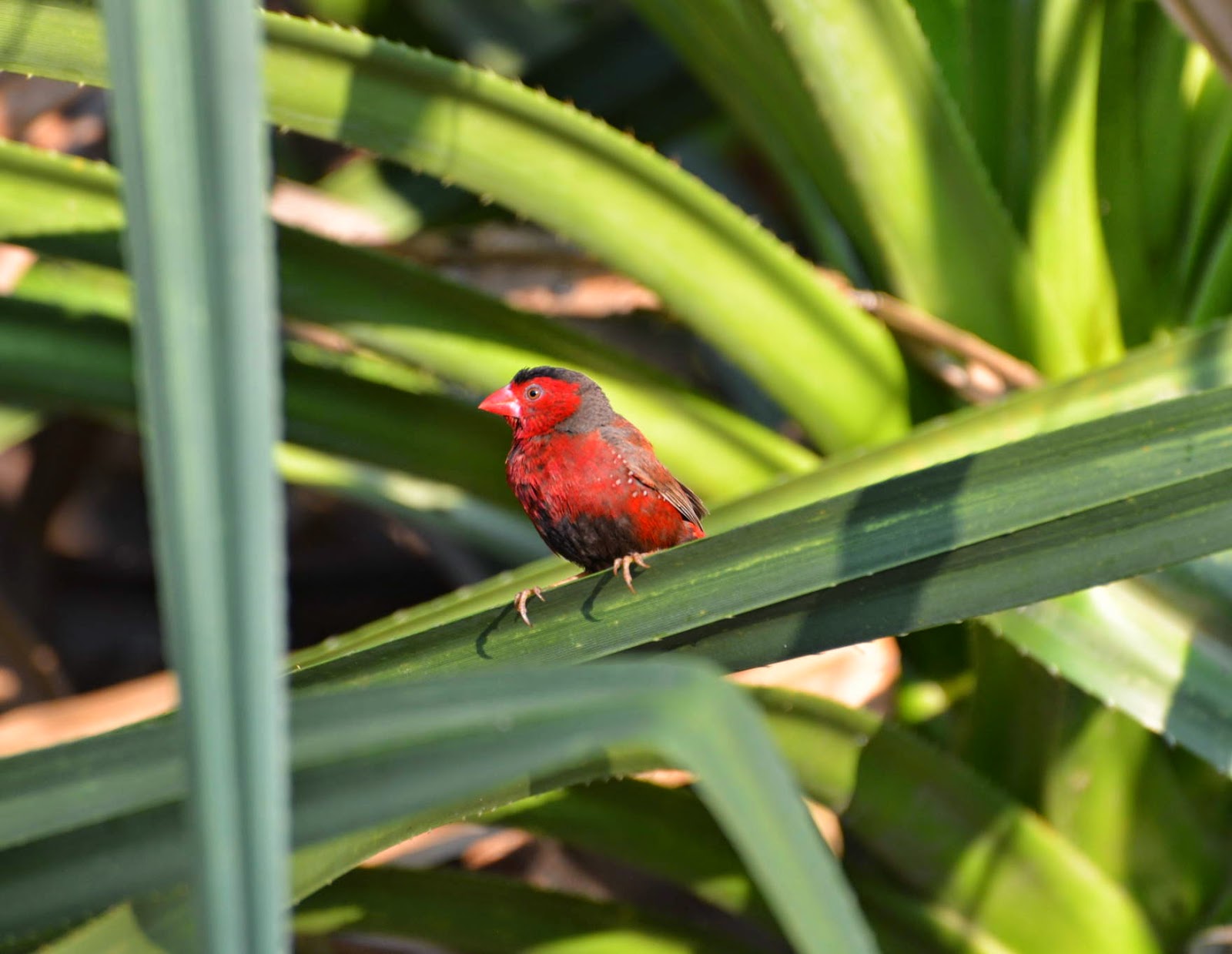
Kakadu National Park has over 280 species of birds! Whistling ducks, darters, herons, jabiru, jacana, eagles, kites, finches, pheasant coucal, etc....
My ecologist friends might notice that this Jacana is balancing on a patch of Salvinia, which is a noxious weed. The good news is, that this floating freshwater plant gets washed out into the ocean during the wet season.
Excellent advertising for the Barramundi fishing tour!
Some waterlilly species are imported from Asia, but have been providing food for indigenous communities for thousands of years.
Apparently the seeds inside the "shower heads" are edible.
The Tanner family spotting saltwater crocs at Cahills crossing (there were at least 3!).
This one seems to be "hanging out" and waiting for fish to be flushed upstream by the tide.
Better not break down on this crossing!
Ubirr consists of a group of rock outcrops on the edge of the Nadab floodplain in Kakadu National Park. Several natural shelters have a collection of aboriginal rock paintings, some of which are many thousands of years old. The view from the top over the floodplain is gorgeous!
Chapman, Caroline and Alex.
Kakadu rock art has a very unique style and depicts certain creation ancestors as well as animals from the area such as barramundi, catfish, mullet, goannas, long-necked turtles, pig-nosed turtles, rock ringtail possums and wallabies.
Kirsten with Alex on a bushwalk. The two weeks went too quickly and it seems that we have converted even Caroline to the joys of camping!